
Introduction
Artificial intelligence is no longer just a tool that answers questions or generates text on demand. We are currently witnessing a massive paradigm shift: the evolution from passive AI models to autonomous AI Agents. These next-gen systems don’t just suggest actions—they execute multi-step workflows, make independent decisions, and manage complex digital tasks with minimal human intervention.
For remote professionals, freelancers, and tech ecosystems, this revolution is completely redefining the meaning of productivity.
What Exactly Are AI Agents?
Unlike standard chatbots that operate on a strict prompt-and-response basis, AI Agents are designed with autonomy, memory, and tool-use capabilities.
- Goal-Oriented Autonomy: You give them a final objective (e.g., “Research the top 5 competitors in the AI niche and create a comparison report”), and they map out the necessary steps themselves.
- Tool Integration: They can browse the web, interact with APIs, manage databases, and even execute code to achieve their goals.
- Self-Correction: If an AI agent encounters an error while executing a task, it can analyze the failure and try an alternative approach without waiting for a new human prompt.
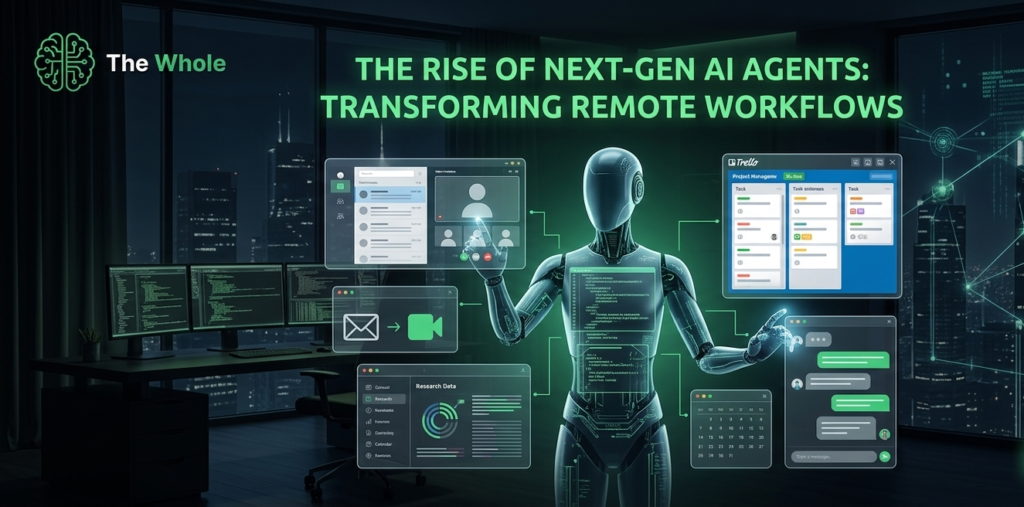
How AI Agents Are Transforming Remote Workflows
The integration of autonomous agents into daily digital operations is solving one of the biggest challenges of remote work: operational friction. Here is how they are making an impact:
1. Advanced Task Automation
Traditional automation (like basic Zapier integrations) follows strict “If This, Then That” rules. AI agents, however, bring dynamic decision-making to the table. They can handle customer support queues, screen project applications, and sort through data while adapting to contexts that would usually break simple automated software.
2. Autonomous Content and Research Pipelines
For content creators and technology bloggers, tracking global tech shifts in real-time is a massive time commitment. AI agents can be deployed to constantly monitor specific subreddits, tech forums, and research papers, filtering out the noise to deliver high-yield, actionable insights directly to a database or draft folder.
3. Smart Project Management
Managing timelines, coordinating deliverables, and tracking task dependencies across global time zones can be overwhelming. Next-gen agents can act as virtual project coordinators—updating boards, sending smart follow-ups based on conversational context, and flagging potential bottlenecks before they happen.
The Road Ahead: Co-Existing with Autonomous Systems
As we move deeper into this AI-driven era, the blueprint for success lies in collaboration, not replacement. The professionals who thrive will be those who master the art of directing these systems—acting as supervisors or “architects” of AI workflows rather than manual executioners.
The AI pulse is moving faster than ever. Staying ahead of these autonomous intelligence systems isn’t just an advantage anymore; it’s a necessity for anyone looking to command the future of digital work.
Meta Description (For SEO):
Discover how next-gen autonomous AI agents are moving beyond simple prompts to completely revolutionize remote workflows and digital productivity this year.